Process
How I use AI without letting AI use me.
Fifteen years of hands-on craft set my bar. AI changes how much ground I can cover at that bar, more directions explored, more frames tested, more worlds built, and changes nothing about who decides. Here is the actual pipeline, not the pitch.
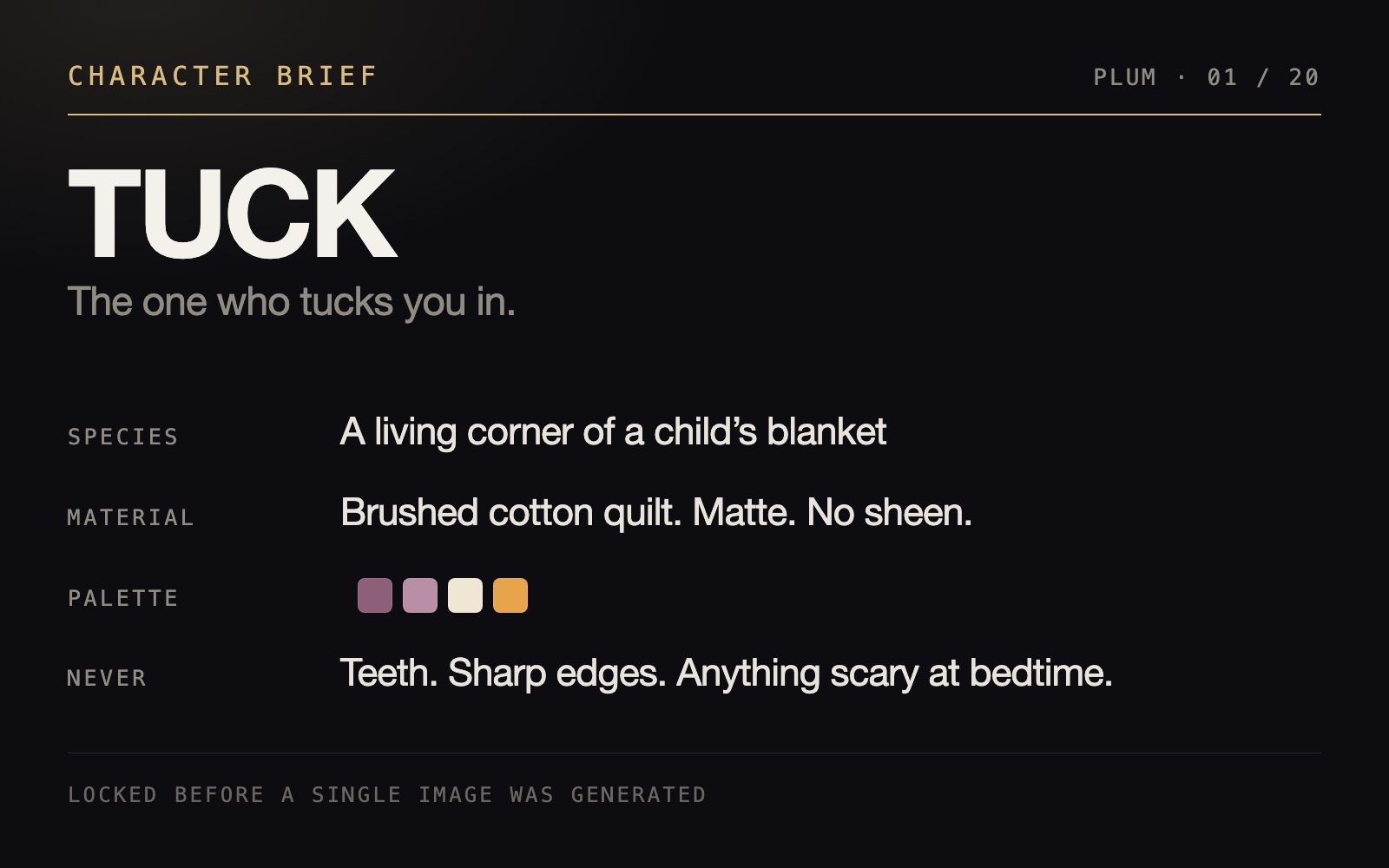
The brief comes first
Every AI-assisted project starts the way every project starts: a written brief. For the PLUM cast that meant twenty briefs, one per character, locking species, silhouette, material, palette, and personality before a single image was generated. AI without a brief produces options. A brief produces a direction.
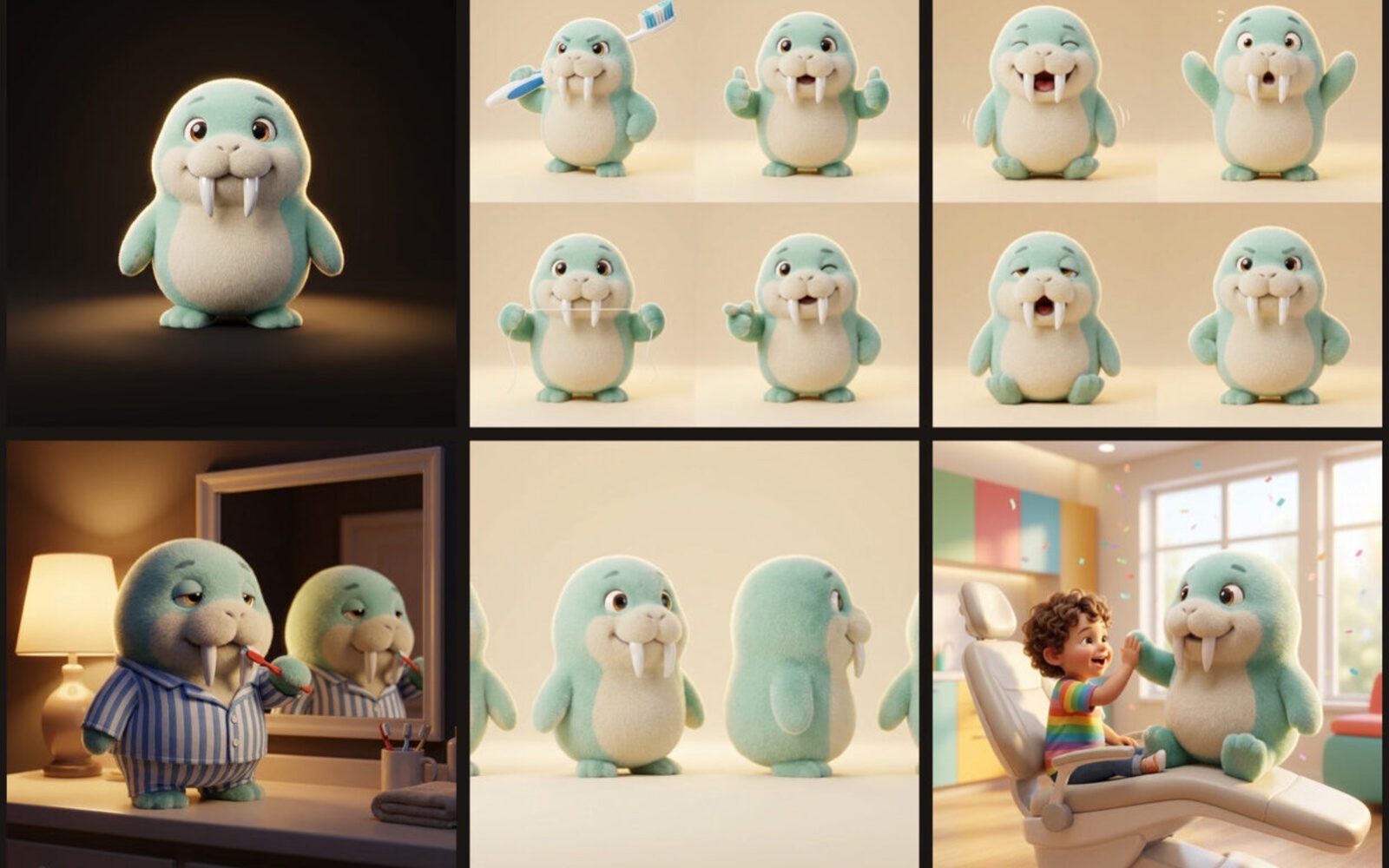
Reference conditions the machine
Generation runs against curated reference packs, the same way a photographer works from a treatment. Locked turnaround angles, material studies, and style boards keep every batch pointed at the same world, so consistency is designed in, not hoped for.
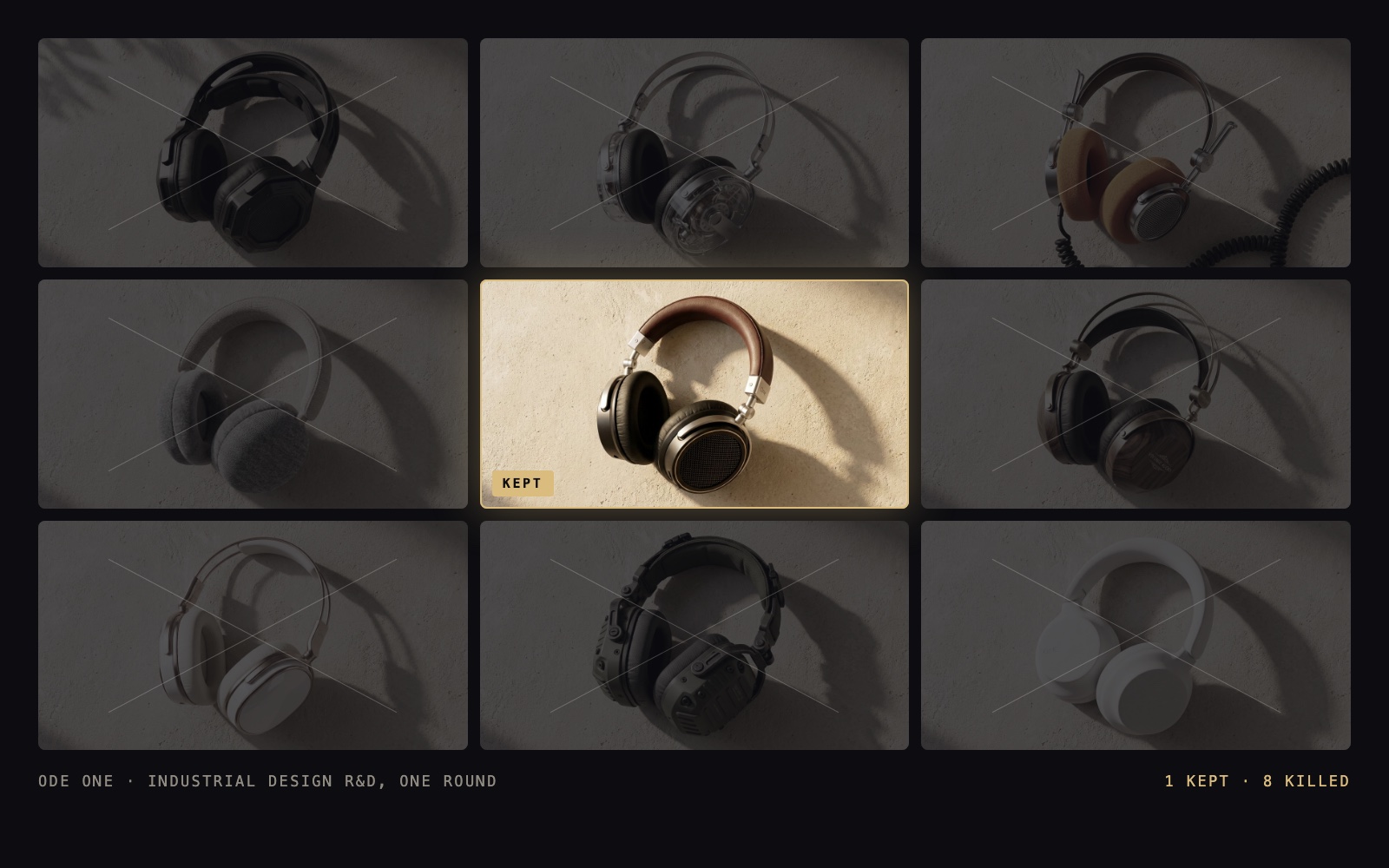
Generate wide, kill hard
Batches are generated wide on purpose, then judged like dailies from a shoot. Most frames die. What survives is whatever holds the brief: on model, on palette, on personality. The kill rate is the craft. Taste is the filter the machine does not have.
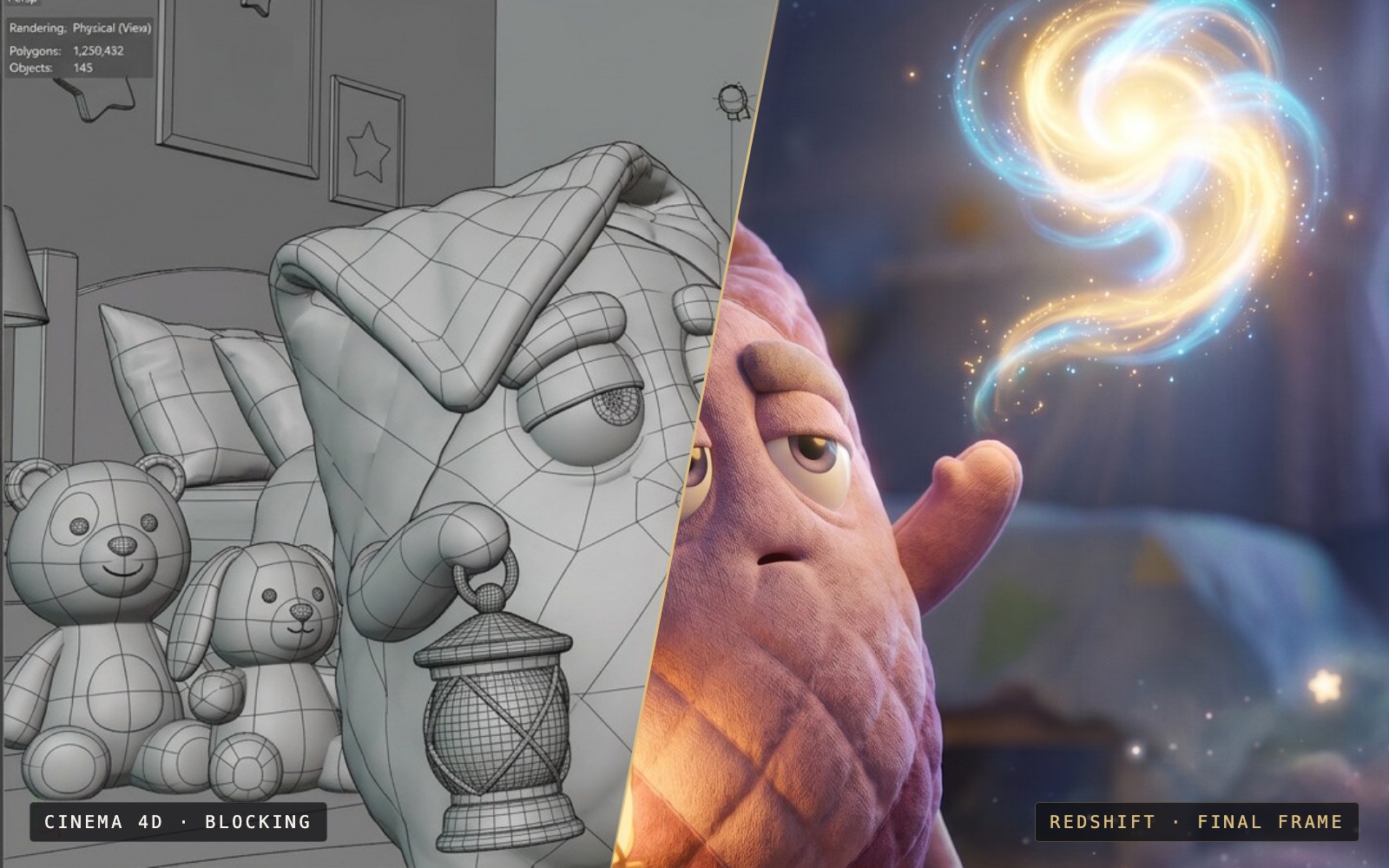
Traditional tools direct it, then finish it
Cinema 4D and After Effects are not cleanup, they are where the shot gets directed. I block camera moves in C4D and animate primitives in After Effects to show a model exactly how something should move before it generates a frame. Surviving material then comes back into the same pipeline as any other footage: Photoshop for surgery, C4D when the shot needs real 3D, After Effects and Resolve for edit, comp, and grade. The finish is held to the same bar as fully hand-built work, because it ships next to it.
Where the line is
AI never chooses the idea, the type, the layout, the cut, or the final grade. It has no taste and no stake. It generates raw material at a volume no team could, and everything it makes passes through the same judgment as a frame I built by hand. When something is off model, it dies, no matter how pretty it is.
Proven at production scale.
FELT
260 stills · 100 clips · 20 charactersA licensable character library where every asset of every character stays on model, briefed, generated, judged, and finished by one set of eyes.
See the case study →JALUNE · I’ll Manage
A full music videoAn official release directed through the hybrid pipeline, every generated element treated like footage from a shoot: judged, art directed, reshot, and cut against the vision.
See the case study →PLUM
A character IP in productionCharacter R&D, look development, and world-building at a scale one artist could not traditionally afford, feeding an episode now in production.
See the case study →I also build the tools
I designed and built Coveboard ↗, AI-integrated pre-production and editing software: boards, generation, look development, animatics, and delivery on one canvas. Every animatic in my case studies is timed in it. When the workflow I wanted did not exist, I shipped it.
Working set: Midjourney, Adobe Firefly, Nano Banana, Seedance, Kling, Google Veo for generation. Photoshop, Cinema 4D, Redshift, After Effects, DaVinci Resolve for everything that matters after.